
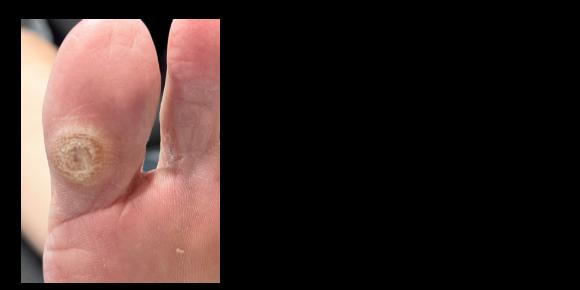
Corns and callouses are your body's way of protecting you from blisters or open sores. Your body builds up hard, dead skin to thicken and toughen an area where there is increased pressure or friction. When this area becomes too thickened, increased pain and redness may result. Corns and callouses can develop on the young and in the older person.
Why do these corns and callouses start in the first place?
The following structural changes in the toes and the ball of the foot cause increased pressure within your shoes:
Hammertoes
When the toe is contracted instead of laying flat, that is called a hammertoe. This condition may be caused by a tendon imbalance, excessively long toes, ill fitting shoes, a foot with a very flat or high arch or arthritic conditions. Sometimes a bunion deformity may also cause pressure. Because the toe joint buckles and becomes more prominent on top, this area rubs against the shoe and causes a callous. Sometimes a small inflamed red pouch may develop and make this condition more painful on the callous. This condition is called bursitis. When the hammertoe is present for many years, arthritis may develop, making the toe stiffer and more achy.
Bone Spurs
A bone spur is an overgrowth of bone that may occur within a toe. When you get into a shoe, this spur may rub against the adjacent toe and cause a "soft corn" between the toes. This corn is called soft because it holds moisture and may not be hard. When this spur is on the outside of the little toe, you may develop a corn where the shoe is rubbing on your little toe. This is a condition where the long bones in the middle of your foot have increased pressure in the ball of your foot. This may occur because the bone is excessively long or sits lower than the adjacent bones. A hammertoe will also cause increased pressure on these bones. As they age, some people will lose the protective fat pad in the ball of the foot that they were born with so that there is less cushioning in this area, making this condition worse. When these treatment options are no longer providing the comfort you need, consultation with your podiatric physician is advised to discuss surgical options.